
structured cabling solutions in dubai

Walk into any modern building in Dubai, and the smart features are easy to spot: touchless access, intelligent surveillance, seamless Wi-Fi, automated lighting, climate control, and connected meeting spaces. What usually goes unnoticed is the infrastructure that makes all of this work together.

A smart building is not defined by the number of technologies installed, but by how reliably those systems communicate. Structured cabling solutions across Dubai are critical because a well-planned cabling framework creates the physical foundation for data, voice, security, and automation systems to function without constant disruption.

This matters even more in a city actively advancing digital transformation through connected infrastructure initiatives and smart urban development. Whether it is a commercial tower, hotel, healthcare facility, or enterprise office, smart performance depends on what sits behind the walls.

Smart Buildings Are Only as Smart as Their Infrastructure

A smart building is not simply a property filled with connected devices. Its real intelligence comes from how efficiently those systems exchange information, respond to inputs, and operate as one coordinated environment. Industry definitions of smart buildings consistently point to integrated networks as the foundation that allows automation, monitoring, and building management systems to function effectively.

Modern commercial spaces actually rely on:

  • Access control systems that authenticate entry in real time
  • Surveillance networks that transmit uninterrupted video feeds
  • Building management platforms that regulate lighting and HVAC
  • VoIP communication systems across departments
  • Occupancy sensors that support automation and energy optimisation

Individually, these technologies may work. But without a stable physical network underneath, they often become isolated tools rather than a connected ecosystem.

This is where the implementation of structured cabling solutions in Dubai makes a measurable difference. Instead of creating fragmented wiring setups that become harder to manage over time, structured cabling introduces an organised framework designed to support multiple technologies through a unified infrastructure.

For developers, facility teams, and business operators, structured cabling translates into easier troubleshooting, cleaner expansion planning, and fewer operational disruptions as technology requirements grow.

How Smart Building Systems Stay Connected

Smart building technology is often judged by what occupants interact with, but most of those systems are only as dependable as the network infrastructure connecting them. A single disconnected component can affect operations far beyond one device, especially in commercial environments where multiple systems run simultaneously.

Here’s a simple breakdown:

Visible Smart System

Hidden Infrastructure Role

Operational Impact

Access Control

Carries authentication data between readers and control systems

Smooth, secure entry management

CCTV Surveillance

Supports continuous video transmission

Reliable monitoring and incident visibility

VoIP Communication

Enables internal and external voice traffic

Stable business communication

Building Management Systems

Connects HVAC, lighting, and automation controls

Better environmental control

IoT Sensors

Transfers occupancy and performance data

Smarter automation decisions

This interconnected setup is why organised infrastructure planning matters from the start. A patchwork cabling arrangement may support one or two systems initially, but expansion becomes messy once new technologies are introduced.

Businesses investing in structured cabling solutions available in Dubai are not simply installing cables; they are creating a scalable communication framework that supports current operations while leaving room for future upgrades.

This is particularly relevant in offices, hotels, healthcare facilities, and mixed-use developments where technology expectations continue to evolve. When the physical network is thoughtfully designed, adding new systems becomes far less disruptive. Instead of constant rewiring or temporary fixes, the building gains an infrastructure that adapts to changing operational needs.

What Happens When The Structured Cabling Is Weak?

Smart building systems do not usually fail all at once. More often, problems show up gradually, with slower response times, connectivity dropouts, inconsistent device communication, or systems that become harder to manage as new technology is added. What appears to be a software issue is often rooted in the underlying infrastructure.

A weak or poorly planned network setup can create challenges such as:

  • Frequent network jams during peak usage
  • CCTV feeds with interruptions or lag
  • Access control delays at entry points
  • Difficulty integrating new smart systems
  • Longer troubleshooting cycles for IT and facility teams
  • Unplanned upgrade costs caused by outdated layouts
 

Research from industry infrastructure bodies consistently points to structured network design as a key factor in long-term reliability and maintainability for connected environments. This is why adopting structured cabling solutions within Dubai becomes a practical business consideration rather than a technical afterthought. A building that expands its automation, communication, or monitoring systems over time needs infrastructure that can adapt without repeated disruption.

For developers and facility managers, the cost of weak planning is not limited to maintenance. It can affect tenant experience, operational continuity, and future scalability, three things that matter significantly in technology-driven building environments.

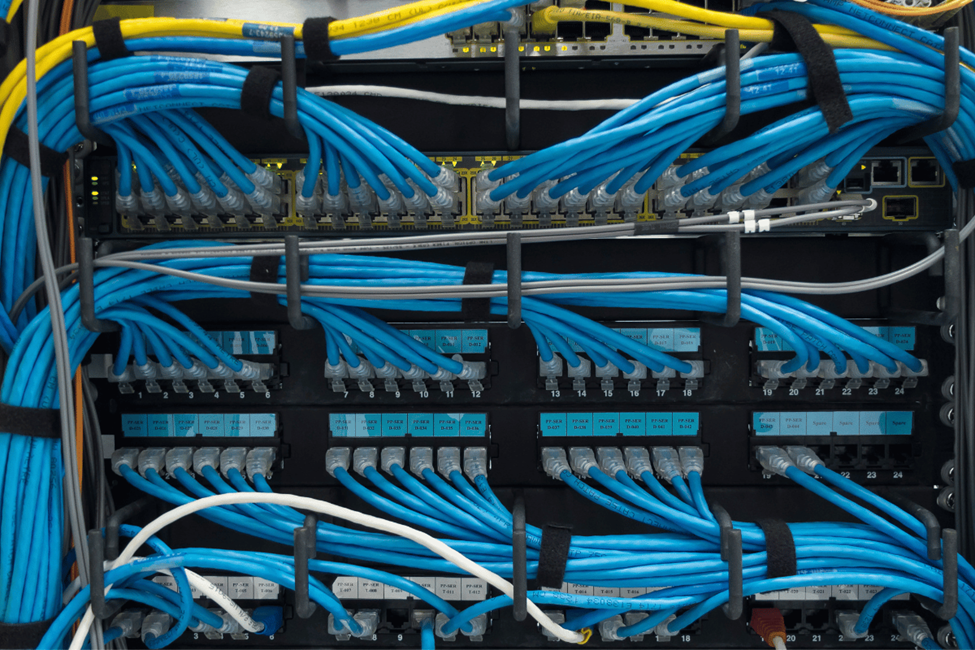
Why Structured Cabling Matters Even More in Dubai’s Smart Infrastructure Landscape
Why Structured Cabling Matters Even More in Dubai’s Smart Infrastructure Landscape

Dubai’s approach to urban development has consistently leaned toward connected, digitally enabled environments. Dubai city’s strategy explicitly focuses on building a robust digital ecosystem that supports integrated services and smart transformation across sectors. That larger direction makes infrastructure planning far more relevant for commercial properties operating in the city.

In practical terms, smart buildings in Dubai often face higher performance expectations because they support technology-heavy operations across hospitality, corporate offices, healthcare, and mixed-use developments.

  • Hotels depend on uninterrupted guest connectivity, digital access systems, and integrated room controls
  • Corporate environments require reliable communication, conferencing, and secure network access
  • Healthcare facilities rely on stable data transmission for connected systems and monitoring
  • Expanding developments need infrastructure that can support future upgrades without disruptive retrofitting
 

This is where structured cabling solutions offered in Dubai become a long-term operational decision rather than a procurement checkbox.

Installing premium technology without an organised network infrastructure often creates problems that are expensive and difficult to fix later. Expansion becomes more complex, maintenance grows inefficient, and integration between systems can become inconsistent.

Cabling Infrastructure Planning for Smarter Building Performance

Technology investments deliver better results when the underlying infrastructure is planned with long-term functionality in mind. Zoomline Network helps businesses create organised connectivity frameworks that support evolving operational requirements across commercial environments. Whether the project involves a corporate office, hospitality property, healthcare facility, or mixed-use development, structured cabling solutions across Dubai should be approached as a strategic infrastructure decision, not a short-term installation task.

A well-planned network foundation simplifies integration, supports expansion, and reduces avoidable operational complexity over time. If your building project requires dependable infrastructure built for connected environments, we offer practical expertise which is aligned with modern technology demands.

FAQs

How early should structured cabling be planned in a smart building project?

Ideally, during the design and infrastructure planning stage, well before fit-outs or technology installation begin. Early planning helps align network pathways, equipment room placement, power coordination, and future expansion needs, reducing expensive design changes or installation conflicts once construction progresses.

In many cases, yes. It depends on the building’s current network condition, pathway accessibility, and expansion goals. Many retrofit projects use a phased upgrade approach, replacing critical sections while retaining usable infrastructure, rather than dismantling the entire cabling environment at once.

Traditional point-to-point cabling is often installed for immediate functional needs, which can create complexity as systems expand. Structured cabling follows an organised architecture with standardised layouts, making management, fault isolation, upgrades, and integration with multiple technologies significantly more practical over the long term.

There is no fixed replacement cycle. Well-installed structured cabling can support operations for many years, but review timelines depend on bandwidth requirements, technology adoption, and business growth. Infrastructure assessments become important when new systems demand performance beyond the network’s original design capacity.

Look beyond pricing. Evaluate technical experience, standards compliance, project documentation practices, scalability planning, testing processes, and post-installation support. A capable provider should understand commercial infrastructure requirements and recommend solutions that match both current operational needs and future technology expansion plans.

Latest Blog Post List

  • APC UPS
  • Aten KVM
  • CCTV Cameras
  • Copper Cable
  • Corning
  • D-link
  • D-link Router
  • Eaton UPS
  • Excel Cable
  • Fiber Optic Patch Cord
  • Fiber Optic Splitter
  • Fortinet
  • FTTH Cabinets
  • Hp Switch
  • IP PBX System
  • Media Converter
  • Molex
  • Network Cabinet
  • Nexans
  • Others
  • panduit
  • Panduit Cable
  • Power Distribution Unit
  • Product News
  • Schneider
  • Server Cabinet
  • Server Rack
  • Splicing Machine
  • Structured Cabling
  • Technology
  • Tp-link
  • Tp-link Router
  • Ubiquiti
  • Ubiquiti Router
  • Yeastar

Product Enquiry