PVC and LSZH Side by Side
Property | PVC | LSZH |
Smoke when burning | Dense, dark | Light and limited |
Gas when burning | Chlorine, forming hydrochloric acid with water | No corrosive halogen gas |
Flame retardance | Higher | Lower |
Abrasion resistance | Higher | Lower |
Water, oil and grease | Contingent oil and grease resistance | Not resistant |
Operating range | -40 °C to +75 °C | -30 °C to +60 °C |
Price | Relatively cheap | Higher |
A Low Smoke Zero Halogen Cable trades some toughness for safer burning behaviour. The question is whether your space rewards that trade.
Myth 1: “It Costs Too Much”
There is a premium. LSZH is considered more expensive than PVC. AMPCOM, a cable vendor, puts the gap at 15 to 30 per cent over equivalent PVC, but it gives no source, so read that as a rough indication, not a rule.
What matters is how much of your project that gap covers. A Low Smoke Zero Halogen Cable only replaces the jacket material, so the premium applies to the cable and patch cords, not to switches, racks or labour.
Work out the premium yourself
- Ask your supplier for the same cable in PVC and LSZH, with the same category, shielding, and length
- Subtract the PVC price from the LSZH price per box
- Multiply by the number of boxes you need
- Compare the result with the total project budget
Myth 2: “It Slows Down the Network”
Jacket material does not affect signal. AMPCOM states that electrical and optical performance depends on conductor quality, shielding design, and connector termination, not the jacket polymer. Category rating still decides speed, so a Cat6A LSZH cable and a Cat6A PVC cable both have to meet Cat6A.
Myth 3: “LSZH Means Fire Resistant”
It does not. LSZH is less flame retardant than PVC, because the point of LSZH is what the cable gives off, not whether it resists flame.
Fire-resistant cables are a separate class. Gulf News reported in 2023 that Dubai Civil Defence inspectors will take about 3 metres of fire-resistant cable from buildings and send it to the Emirates Safety Laboratory for testing. Manufacturers need Emirates Safety Laboratory approval to register products for Dubai projects. Those rules cover fire-resistant cables. They are not a blanket rule that every data cable must be LSZH, so confirm the requirement with your consultant and the project specification.
Myth 4: “LSF and LSZH Are the Same”
LSF is modified PVC, and it still contains halogens. LSZH has none. If a quote says LSF, it is not the same product.
Myth 5: “The Label Proves It”
A printed LSZH mark is a claim. AMPCOM describes the test standards behind it:
Standard | What it tests | Typical limit |
IEC 60754-1 | Halogen acid gas content | Below 0.5 per cent |
IEC 60754-2 | Acidity of gases released | pH above 4.3 |
IEC 61034 | Smoke density | At least 60 percent light transmittance |
IEC 60332-1/3 | Flame propagation | Pass for the class tested |
Ask for third-party test reports against these standards, not only a datasheet statement.
Myth 6: “It Is Hard to Install”
Some say LSZH can be handled almost as easily as PVC. While others say it can feel stiffer and slightly harder to strip, newer compounds are closing the gap. Check bend radius and stripping tools on a sample before you buy a large quantity.
Myth 7: “It Works Anywhere”
LSZH has limits. It is not resistant to water, oil or grease, rates it at -30 °C to +60 °C against -40 °C to +75 °C for PVC, and it does not recommend direct burial. PVC is also more abrasion resistant. Also, the standard LSZH lacks UV protection, so outdoor runs need UV-stabilised versions or conduit.
Myth 8: “PVC Is Always Fine”
Also false. In open spaces, where smoke and gases disperse quickly, LSZH may offer little benefit, and cables are rarely the only plastic in a fire. In enclosed, occupied, or equipment-dense spaces, the case changes.
Where the Extra Cost Pays Off
Space | Why LSZH is worth considering |
Data centres | Equipment is exposed to corrosive gas |
Hospitals | Patients cannot leave quickly |
High-rises | Long evacuation routes |
Transport hubs | Large crowds and enclosed areas |
Schools | Children and limited exits |
Hotels | Many occupants in corridors and risers |
Specifying LSZH in a Mixed Project
Most buildings need both jackets. A practical split:
- Mark enclosed, occupied and equipment-heavy areas on the plan: risers, ceiling voids, data rooms, corridors
- Specify LSZH for those runs and state the test standards in the tender
- Allow PVC in open, ventilated areas if the consultant agrees
- Label each cable type at both ends so installers do not mix them
- Keep the datasheets and test reports in the handover file
What to Ask a Supplier
Before you order a Low Smoke Zero Halogen Cable for a project, get written answers to these:
- Is the jacket LSZH, or LSF? Ask for the exact material
- Which IEC test reports cover the product, and who issued them?
- Is the manufacturer named on the datasheet?
- What category, shielding and conductor size does it have?
- What is the lead time for the quantity you need?
- Does the project specification require a particular rating?
Where Zoomline Fits
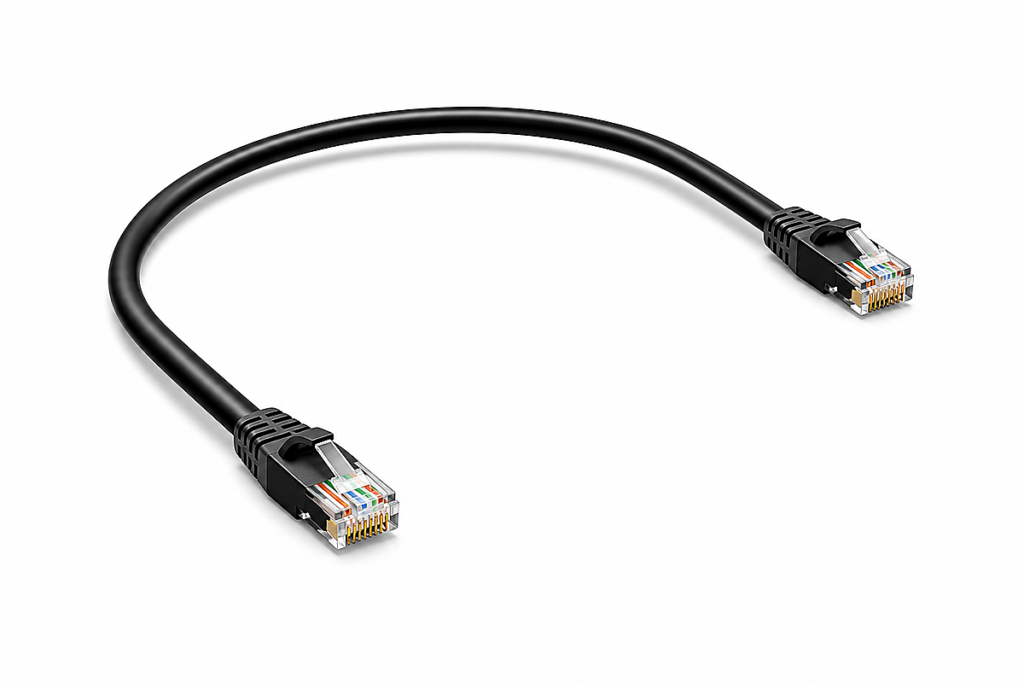
Zoom Line Networks Technology LLC is a Dubai-based distributor of IT, networking and cabling products. Among the LSZH cable suppliers in Dubai, we offer Category 6 and 6A LSZH cables and patch cords, which are built to ISO/IEC 11801 and TIA/EIA 568 and factory-tested. Ask for both before you commit to a Low Smoke Zero Halogen Cable order.
Mistakes to Avoid
- Specifying LSZH everywhere without checking the real requirement
- Accepting LSF as LSZH
- Taking the jacket mark as proof without a test report
- Using a standard LSZH jacket outdoors or underground
- Comparing a Low Smoke Zero Halogen Cable quote with PVC on different categories or lengths
- Ignoring the premium until the budget is already approved
Conclusion
LSZH is not magic and it is not a luxury. It costs more than PVC, but it applies only to the jacket; it does not slow your network, and it earns its place in enclosed, occupied, and equipment-dense spaces. Work out the premium on your own quantities, check the specification, and ask for test reports. Zoomline can supply Cat6 and Cat6A LSZH products from Dubai stock, so Contact Us with your quantities and the Low Smoke Zero Halogen Cable specification, and the team will help you compare options.
- APC UPS
- Aruba
- Aten KVM
- CCTV Cameras
- Copper Cable
- Corning
- D-link
- D-link Router
- Eaton UPS
- Excel Cable
- Fiber Optic Patch Cord
- Fiber Optic Splitter
- Fortinet
- FTTH Cabinets
- Hp Switch
- IP PBX System
- Media Converter
- Molex
- Network Cabinet
- Nexans
- Others
- panduit
- Panduit Cable
- Power Distribution Unit
- Product News
- Ramcro
- Schneider
- Server Cabinet
- Server Rack
- Splicing Machine
- Structured Cabling
- Technology
- Tp-link
- Tp-link Router
- Ubiquiti
- Ubiquiti Router
- Yealink
- Yeastar